Physical AI Hits the Warehouse Floor: Why Edge Robotics + WMS Convergence Is the Story of 2026
NVIDIA's physical AI vision is materialising on warehouse floors. We explore how edge robotics combined with real-time WMS intelligence is reshaping fulfillment — and what operators should do now.
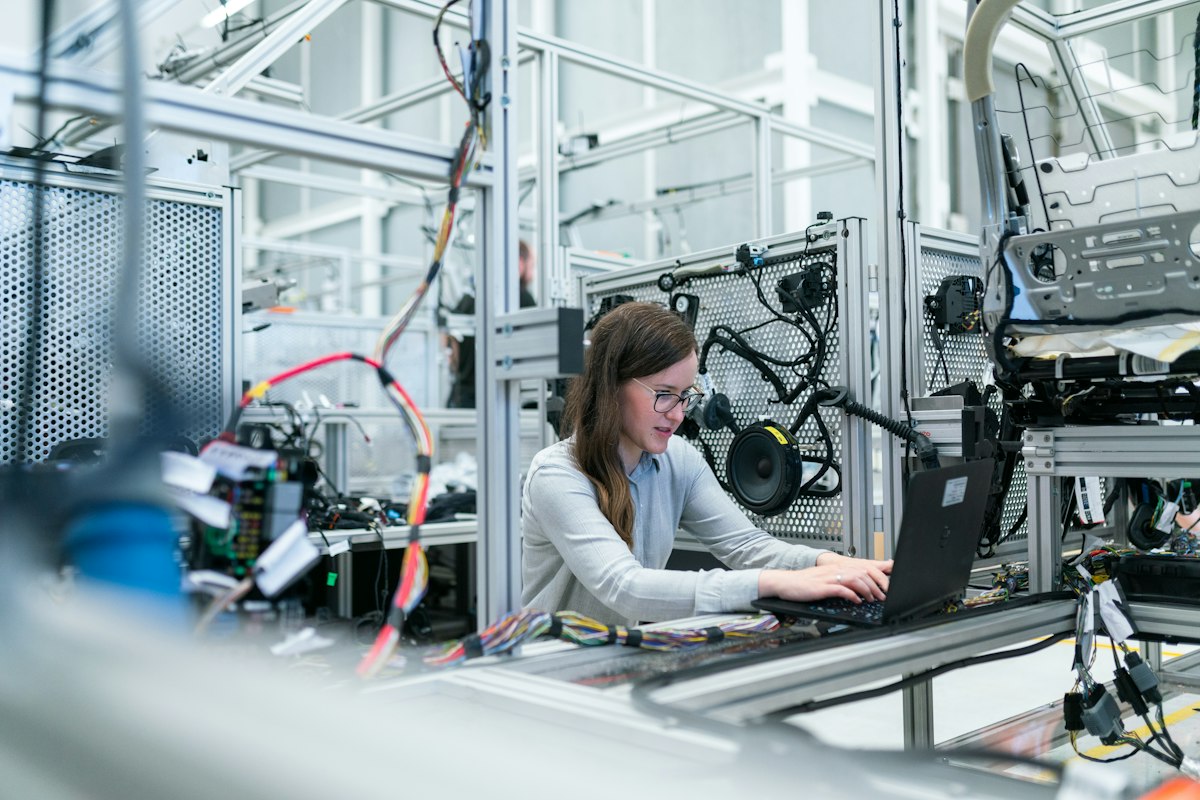
Physical AI Hits the Warehouse Floor: Why Edge Robotics + WMS Convergence Is the Story of 2026
In the weeks since NVIDIA’s GTC 2026 keynote, the phrase “physical AI” has migrated from keynote slides to purchase orders. The reason is simple: the gap between a warehouse management system (WMS) that knows where inventory should be and a robot that physically puts it there is finally closing in real time.
For decades, WMS and robotics lived in separate worlds. The WMS issued work orders. The robot executed motion. The loop between them was batched, brittle, and slow. In 2026, that architecture is being retired. Edge robotics — autonomous mobile robots (AMRs), robotic arms, and sortation systems equipped with onboard GPUs and neural networks — are now negotiating directly with WMS platforms at the API level, making millisecond-level decisions without round-tripping to the cloud.
The Numbers Behind the Shift
The warehouse robotics market is accelerating faster than even bullish analysts predicted. Grand View Research revised its 2026 forecast upward, now projecting the global warehouse robotics market to exceed $18.3 billion by 2030, growing at a CAGR above 16%. More striking is the AMR sub-segment: Interact Analysis reports that over 600,000 AMRs will be deployed globally by the end of 2026, up from roughly 300,000 in 2024.
Yet hardware is only half the story. The real breakthrough is software convergence. When an AMR carries onboard SLAM (Simultaneous Localisation and Mapping) fused with a real-time WMS feed, the robot no longer follows pre-painted magnetic tape. It interprets dynamic congestion, reroutes around spillages, and even predicts which aisle will free up based on active pick-wave data. This is physical AI in its most commercially mature form.
Edge Intelligence, Not Cloud Dependency
Early warehouse robots were cloud-greedy. Every sensor frame travelled to a remote server for inference, introducing latency and single points of failure. The 2026 generation runs inference at the edge — NVIDIA Jetson Thor modules, Qualcomm RB5 platforms, and custom NPU silicon handle object recognition, path planning, and collision avoidance locally.
The operational impact is immediate. One European 3PL piloting edge AMRs reported a 23% reduction in travel time per pick and a near-zero latency response to safety-zone incursions. A US e-commerce fulfilment network using combined edge vision + WMS slotting reduced mis-picks by 34% in a three-month trial.
Where the Integration Still Friction
Convergence is not plug-and-play. Engineers consistently report three pain points:
- Data model mismatch — WMS platforms speak in locations, SKUs, and waves. Robots speak in metres, radians, and joint angles. Bridging these ontologies remains custom work.
- Cycle-time mismatch — A WMS can replan a wave in seconds. A robot takes minutes to physically traverse a warehouse. Synchronising planning horizons is a control-theory problem hiding inside a logistics problem.
- Safety certification lag — Standards like ISO 3691-4 are evolving, but national regulators are not keeping pace with hardware release cycles. Deployments in Asia-Pacific often outpace local certification frameworks.
What Operations Leaders Should Prioritise
For teams evaluating the next capital investment, the playbook is shifting from “buy a robot” to “build a nervous system.” Three priorities stand out:
- Real-time inventory accuracy — Edge robotics amplifies WMS errors. If your cycle-count accuracy is below 99%, robots will amplify the problem. Fix the data foundation first.
- API-native WMS architecture — Robots do not read spreadsheets. A WMS with event-driven webhooks, GraphQL queries, and MQTT telemetry streams is now a prerequisite, not a luxury.
- Human-robot workspace design — The most productive sites do not segregate humans and robots; they choreograph them. Cobot pick-assist stations, where robots bring totes to ergonomic pick heights while humans handle fine motor tasks, are delivering 30–40% uplift in lines per hour.
How Inventrack Powers the Edge-Robotics Warehouse
At Intensecomp, we designed Inventrack as an API-first platform precisely because we saw this convergence coming.
Inventrack 05 — WMS provides the real-time event fabric that edge robots need. Our native webhooks and MQTT topics broadcast inventory updates, location reservations, and wave releases with sub-second latency. AMR fleets can subscribe directly to Inventrack topics rather than polling legacy database layers.
Inventrack 01 — Asset Management tracks not just inventory, but the robots themselves. Battery levels, maintenance schedules, utilisation rates, and fault codes are unified in a single dashboard — giving fleet operators the same visibility over AMRs that they have over pallet racks.
Inventrack 08 — People Tracking enables safe human-robot collaboration. Real-time zone occupancy and proximity alerts integrate with AMR safety stacks, ensuring robots slow or reroute before entering active pick corridors.
Inventrack 03 — MES bridges the manufacturing edge. In hybrid warehouse-factory environments, edge robots need visibility into production completion events to trigger just-in-time raw-material replenishment. Inventrack MES closes that loop natively.
Inventrack 06 — Checklist ensures that robot commissioning, safety audits, and daily pre-shift inspections follow standard operating procedures — critical for regulatory compliance and insurance validation in automated facilities.
Closing
Physical AI is no longer a demo. It is a dock door, a conveyor junction, and a pallet rack in warehouses from Shenzhen to Stuttgart. The companies that will win the next five years are not those that buy the most robots. They are the ones that build the software architecture — real-time, event-driven, and API-native — that lets robots and humans share the floor productively.
Ready to integrate edge robotics with your WMS foundation? Contact us to learn more.
Ready to Transform Your Operations?
Discover how Intensecomp's RFID and IoT solutions can streamline your asset management.
Share this article
Related Articles
Amazon Commits $10 Billion to Voice-Command Robots in Europe — What It Means for Warehouse Tech
Amazon unveiled a $10 billion European robotics plan featuring Proteus 2.0, STARK, and Vulcan robots that understand plain-language voice commands. We break down what this means for mid-market warehouse operators and how to prepare.
Agentic AI in the Warehouse: Why 2026 Is the Year Software Becomes Your Most Valuable Worker
Agentic AI is moving from chatbots to warehouse floors. We break down why autonomous AI agents represent a bigger operational shift than physical robots — and how to prepare.
Zero-Shot AI Warehouse Robotics: How No-Training Robots Are Breaking the SKU Barrier
Swiss 3PL MS Direct deployed zero-shot AI robots that pick 1,500 orders per day across 60,000 SKUs with no per-item training. Here's why zero-shot robotics is reshaping warehouse automation in 2026.