Zero-Shot AI Warehouse Robotics: How No-Training Robots Are Breaking the SKU Barrier
Swiss 3PL MS Direct deployed zero-shot AI robots that pick 1,500 orders per day across 60,000 SKUs with no per-item training. Here's why zero-shot robotics is reshaping warehouse automation in 2026.
Zero-Shot AI Warehouse Robotics: How No-Training Robots Are Breaking the SKU Barrier
For years, the biggest obstacle to fully automated warehouse picking was not the robots themselves — it was the catalog. Conventional pick robots need product images, grip instructions, and manual tests before they can handle a new SKU. In eCommerce fulfillment, where product catalogs change weekly, that training bottleneck made automation economically impossible for most operators.
In June 2026, that barrier fell.
The Breakthrough: Picking Without Per-Item Training
Swiss eCommerce logistics provider MS Direct, which moves more than 32 million items per year, deployed a robot from Stuttgart-based Sereact that picks and packs orders without any per-item training. The robot handles roughly 1,500 single-item orders per day at MS Direct’s largest fulfillment center in Arbon — and it works through the night.
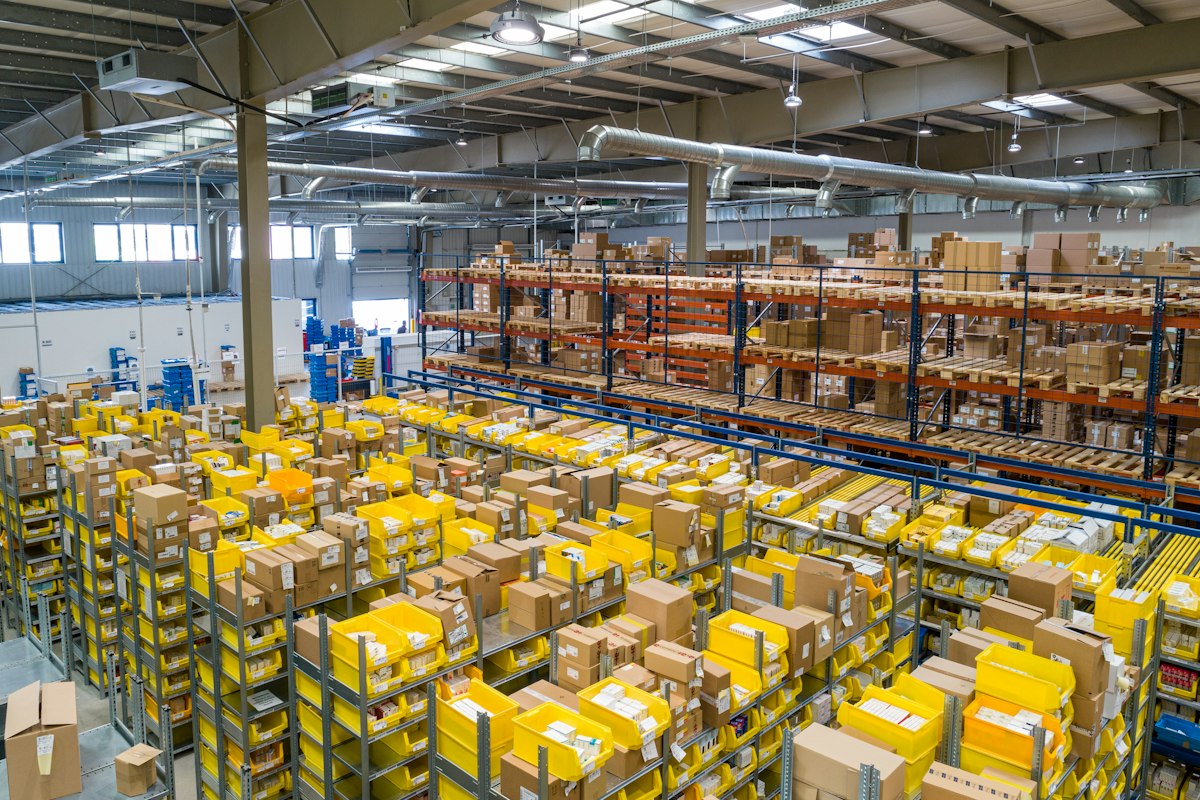
The warehouse holds more than 60,000 SKUs. That range broke the first pick robot MS Direct tested: too many products were unknown to the system, and picking stayed manual at eight of the nine AutoStore ports. Sereact’s zero-shot system changed that. The robot analyzes each object in real time, identifying shape, material, and color, then selects a grip without product-specific training. It also adjusts in real time if an item shifts during a pick.
One in roughly 53,000 picks requires remote human intervention — a reliability level that makes overnight, lights-out operation viable.
The deployment paid for itself in about nine months, a return MS Direct attributed in part to Switzerland’s high labor costs, according to MassRobotics.
Amazon’s Parallel Bet on Force-Feedback Picking
The problem is not limited to mid-size 3PLs. Amazon’s Vulcan robot, deployed in Spokane and Hamburg, uses force-feedback sensors because most commercial robots cannot reliably detect or adapt to unexpected contact with an item. Amazon is investing €10 billion in its European fulfillment network, with Vulcan and other AI-powered warehouse systems central to that expansion.
Amazon’s fulfillment network spans more than 200 facilities in Europe alone. Most third-party logistics providers run a fraction of that volume across dozens of clients, each with a different and changing product catalog. For them, zero-shot adaptability is not a nice-to-have — it is the difference between automation that scales and automation that stalls.
The Software Layer Is the Real Battleground
Sereact’s model is trained on production data rather than simulations. Every successful pick, every failure, and every recovery is captured with synchronized observations, robot state, gripper force feedback, and outcome, then used to continuously update the model. More than 200 Sereact systems are live across Europe, having completed over 1 billion real production picks for customers including BMW, Daimler Truck, PepsiCo, and Austrian Post.
The company raised $110 million in a Series B led by Headline in April 2026 to scale its next-generation Cortex model and open its first U.S. office in Boston.
The pattern across the industry is consistent: the competitive advantage is shifting from “who has the most robots” to “who can coordinate them with the smartest software.”
What This Means for B2B Operators
For procurement and operations leaders evaluating warehouse automation in 2026, the playbook is changing. The critical questions now include:
- Does the vendor’s AI adapt to new SKUs without retraining, or does every catalog change trigger a deployment project?
- Can the system learn from production data continuously, or does improvement require manual engineering?
- How does the software layer integrate with existing WMS, inventory, and asset-tracking systems?
- What is the true payback period when labor cost savings, throughput gains, and night-shift capacity are combined?
How Inventrack Powers AI-Ready Warehouses
At Intensecomp, we build the operational software layer that makes advanced robotics productive from day one. Inventrack connects AI-driven robots, human workers, and inventory into a single operational picture:
-
Inventrack 01 — Asset Management tracks every robot, gripper, sensor, and reusable asset across its full lifecycle. Know utilization rates, maintenance windows, and firmware versions before downtime hits.
-
Inventrack 05 — WMS ingests real-time telemetry from zero-shot pick robots, RFID gates, and IoT sensors. When a robot completes a pick, the system updates inventory, location, and order status automatically — no manual scans required.
-
Inventrack 03 — MES links production-line output to warehouse inbound workflows. When a new SKU enters the system, MES triggers the pre-configuration logic that tells the robot how to handle the incoming batch — even before the first physical pick occurs.
-
Inventrack 06 — Checklist enforces safety and compliance protocols for mixed human-robot environments, including pre-shift robot inspections, calibration verification, and incident documentation.
-
Inventrack 08 — People Tracking provides real-time visibility into worker location and zone occupancy, enabling dynamic safety zoning when robots enter shared aisles and improving labor allocation during peak shifts.
The Bottom Line
Zero-shot AI picking is not a laboratory demo anymore. It is running production floors in Europe, handling 60,000-SKU catalogs, and delivering nine-month payback periods. The warehouse operators who treat software orchestration and real-time data integration as first-class investments will be the ones who can deploy, scale, and adapt robotics at the speed their catalogs demand.
Ready to connect your robots to your operational brain? Contact us to see how Inventrack bridges the gap between zero-shot AI and day-one productivity.
Ready to Transform Your Operations?
Discover how Intensecomp's RFID and IoT solutions can streamline your asset management.
Share this article
Related Articles
Humanoid Robots and 50,000-Strong AMR Fleets: The Warehouse Just Changed in One Week
Unitree's $9B IPO, Brain Corp's 50,000-robot milestone, and Multiway's 5,000-location Malaysia deployment — what B2B procurement teams need to act on in August 2026.
Physical AI Hits the Warehouse Floor: Why Edge Robotics + WMS Convergence Is the Story of 2026
NVIDIA's physical AI vision is materialising on warehouse floors. We explore how edge robotics combined with real-time WMS intelligence is reshaping fulfillment — and what operators should do now.
Amazon Commits $10 Billion to Voice-Command Robots in Europe — What It Means for Warehouse Tech
Amazon unveiled a $10 billion European robotics plan featuring Proteus 2.0, STARK, and Vulcan robots that understand plain-language voice commands. We break down what this means for mid-market warehouse operators and how to prepare.